What is problem gambling – and how is it different from ordinary gambling
 Save
Problem gambling is when placing bets stops being a choice you control and starts causing harm to your life, your money or the people around you. It is not about how much you stake or how often you play – it is about the effect gambling has on everything else. The information on SEEC helps you recognise the difference and find practical ways forward if gambling has stopped feeling like entertainment.
The line between gambling and problem gambling
Gambling itself is a form of entertainment. Someone places a bet, wins or loses, and moves on. Problem gambling begins when that pattern breaks down – when losses lead to chasing, when thoughts about gambling crowd out other plans, or when money meant for rent or food goes on bets instead.
The shift is not always sudden. Many people describe a gradual slide: a win that felt thrilling, then a loss that felt like it needed correcting, then a cycle that became harder to step away from. The difference lies not in the activity itself but in whether you can stop when you want to and whether gambling is taking more than you can afford to give.
What problem gambling looks like in everyday life
The effects show up in routines, relationships and finances. Someone might start borrowing money they cannot repay, lying about where their wages have gone, or skipping lectures or work to place bets. Mood swings become sharper – elation after a win, then anger or withdrawal after a loss.
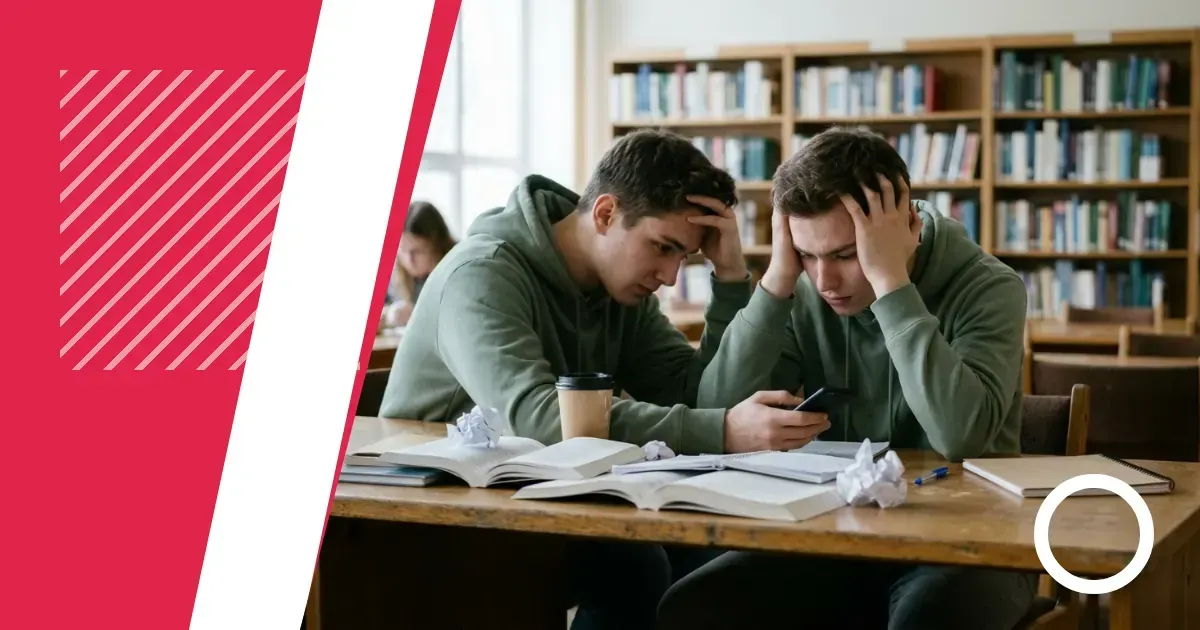
Sleep suffers. Concentration drops. Plans with friends get cancelled because the money set aside for them has already been spent. For students, this might mean missing assignment deadlines because the evening was spent on a gambling site. For young adults, it might mean avoiding calls from family because the questions about money feel impossible to answer honestly.
- Spending more time or money on gambling than originally planned
- Repeatedly trying to win back losses in the same session or the next day
- Lying to flatmates, partners or family about where money has gone
- Feeling restless or irritable when trying to cut down or stop
Why it happens to some people and not others
There is no single reason. Some people are drawn to the excitement of risk; others use gambling to escape stress or loneliness. A big win early on can create the belief that another is always within reach. For others, the behaviour develops slowly, starting as a casual habit and becoming something harder to control.
Life circumstances play a part. Financial pressure, isolation, unresolved mental health struggles or simply having easy access to gambling sites on a phone can all increase the risk. The design of some gambling products – fast-paced games, the option to bet again immediately, notifications that pull you back in – can make it harder to step away even when you want to.
The moment people realise something has changed
Recognition often comes through a specific incident: a bank account that will not cover a bill, a partner asking a question that cannot be answered truthfully, or a realisation that an entire evening disappeared into placing bets. Some people describe looking at their transaction history and feeling shocked at how much has been spent over a week or a month.
Others notice the emotional toll first – guilt that sits heavily after a session, shame about lying, or the sense that gambling is no longer enjoyable but feels compulsory. Recognising the problem does not require a crisis. It can begin with a quieter acknowledgment that things have drifted in a direction you did not choose. If you are noticing warning signs in yourself or someone close to you, this guide on recognising the signals offers a fuller picture.
Steps you can take when you recognise the problem
Awareness is the first movement towards change. Once you recognise that gambling is causing harm, practical steps become possible. These are actions you can take this week, not distant plans.
- Tell one person you trust. A flatmate, a friend, a family member – someone who can listen without judgement and help you stay accountable.
- Set up a self-exclusion through GamStop. It blocks access to licensed gambling sites across Great Britain and takes effect immediately.
- Remove gambling apps from your phone. Delete saved payment details from sites you have used. The harder it is to access, the more time you have to reconsider.
- Call the National Gambling Helpline on 0808 8020 133. It is free, confidential and available at any hour. You do not need to have a clear plan before you ring – the conversation itself can help you find one.
- Block access to money you might use impulsively. Hand your bank card to someone you trust for a few days, or move money into an account that requires a day's notice to withdraw.
- Write down what you want to protect. Your degree, your relationship, your independence – whatever gambling is putting at risk. Keep the list somewhere visible.
These steps are not about perfection. If you slip, the helpline is still there. If you unblock a site, you can block it again. Progress is rarely a straight line, and knowing what to do after a relapse can make the difference between giving up and continuing forward.
Tools that put control back in your hands
Licensed gambling sites are required to offer tools that let you set limits before harm deepens. A deposit limit caps how much you can put into an account over a day, a week or a month. Once set, the site will not accept more, even if you ask it to.
A time-out pauses your access for a period you choose – anything from a day to several weeks. During that time, you cannot log in, place bets or reverse the decision. Self-exclusion is longer and more final: it closes your account for a minimum period, and the site will not let you reopen it before that time expires.
| Tool | What it does | How long it lasts |
|---|---|---|
| Deposit limit | Caps the amount you can deposit in a set period | Until you change or remove it |
| Time-out | Pauses access to your account temporarily | A day to several weeks |
| Self-exclusion | Closes your account for a fixed period | Minimum six months, often longer |
| GamStop | Blocks all licensed sites at once | Six months, one year or five years |
These tools work best when you set them before a crisis, not during one. If you are already struggling, blocking software that runs on your phone or laptop can provide an additional layer of protection that does not rely on the gambling site itself.
What happens when you ask for help
Reaching out feels difficult, but the organisations that support people affected by gambling harm are built for this. GamCare offers a free helpline on 0808 8020 133, available around the clock. The person who answers will not judge you, will not ask you to justify anything, and will not push you towards a solution you are not ready for.
BeGambleAware provides online chat, forums and information at https://www.begambleaware.org. Gordon Moody runs residential treatment programmes for people who need intensive support, as well as online therapy, accessible at https://www.gordonmoody.org.uk.
If software feels like a more immediate step, Gamban blocks access to gambling sites across all your devices through a paid subscription at https://gamban.com. BetBlocker is a free alternative available on multiple platforms at https://betblocker.org.
Help is not reserved for people in the worst situations. It exists for anyone who recognises that gambling is taking more than it should. Gambling is for people aged 18 and over, and the support available reflects that – designed for adults navigating real consequences in their education, relationships and finances.
#Warning signs #Deposit limits #Helplines
Download PDF: Steps to Take When Gambling Feels Out of Control PDF, 27 KB
Further reading
Frequently asked questions
What is the difference between gambling and problem gambling?
Gambling is a form of entertainment you control and can walk away from. Problem gambling is when it causes harm to your life, finances or relationships and becomes difficult to stop even when you want to.
How do you know if gambling has become a problem?
Signs include spending more time or money than planned, chasing losses, lying about where money has gone, and feeling restless or irritable when trying to cut down. If gambling is affecting your ability to meet other responsibilities, it has likely crossed the line.
Can you recover from problem gambling?
Yes. Recovery is possible with the right support, whether that is through helplines, counselling, self-exclusion or peer support groups. Progress is rarely linear, but tools and help are available for every stage of the journey.